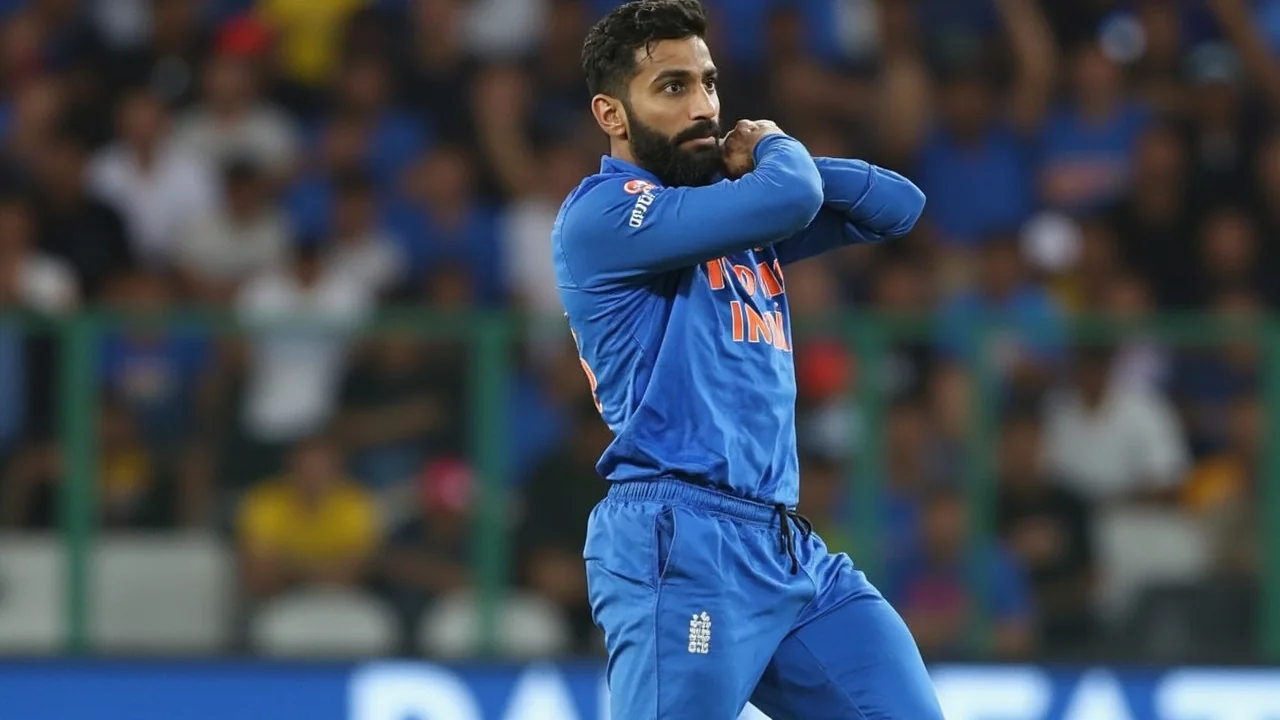
It was the kind of podcast appearance that lands quieter than a press conference and lasts longer than one. On 4 August 2026, the retired England all-rounder Ben Stokes joined his former teammates Stuart Broad and Jos Buttler on For The Love of Cricket, the long-form podcast the two retired quicks-keeper have been running through the summer. The reason the headlines came off the recording rather than off a presser transcript is the kind of comment Stokes has rarely given on the record: that cricket's relationship with alcohol is not an England problem, that it runs from club cricket through to the international dressing room, and that the game has not seriously moved on the question even after his own curfew breach last winter cost him a Test.
Stokes is 35. He announced his retirement from international cricket earlier this summer, ending a career that ran from the 2011 Durham debut through two Ashes wins, a World Cup final in 2019, three consecutive 50-over World Cup campaigns and the Headingley miracle in the 2019 Ashes. The podcast appearance was, in that sense, his first sustained interview in the post-career window — a window that often produces more candid remarks than the dressing-room version of the player ever allowed.
The comment that moved the news cycle is short enough to quote. Cricket, Stokes said, retains a drinking culture "from club cricket all the way up" that has not changed even as the professional game has become more clinical, more measured, more obviously commercial. The remark was directed at the framing that the ECB's response to his own late-night breach last winter was a one-off clean-up — the implication being that the system has a wider drinking question on its hands, and that the response so far has been narrow.
What Stokes actually said, and to whom
Broad and Buttler have been running For The Love of Cricket as a retirement-era project, with the explicit premise that they can ask former and current professionals the kind of question they could not have asked in a press conference. Stokes appeared as a guest for one episode recorded in late July and released on 4 August. The conversation ran longer than an hour and covered Stokes's decision to retire, his workload over the last two seasons and the dressing-room culture question.
The drinking question came up in the second half. Broad framed it as a fair check on the narrative that the ECB's late-night curfew breach, which cost Stokes one Test against New Zealand last winter, was a freak incident. Stokes's answer, paraphrased in the published clip, ran as follows. Cricket has had a drinking culture from club cricket through to the international dressing room for as long as he has played the game. The professional side of the game has changed dramatically in those fifteen years — fitness regimes, data analysis, recovery science, commercial load — but the drinking question has not. The framing that the breach was an England problem is, in his view, an overcorrection.
The remarks are candid without being accusatory. Stokes did not name any other current player, did not suggest any county side or franchise had a worse problem than England, and did not call for sanctions. The point he made was cultural rather than disciplinary: the game as a whole has not seriously tried to change the question.
The New Zealand tour and the curfew breach
The trigger for the question was the late-night outing during England's home Test series against New Zealand in late 2025. The ECB, after an internal investigation, stood Stokes down for one Test and stood down the fast bowler Gus Atkinson for the second Test of the same series. Both players were later cleared by the formal ECB investigation and returned for the third Test of the series.
The episode, in the published record, was a breach of the team curfew the ECB had set for the tour. The ECB did not disclose the exact time, the location or the activity, and the investigation cleared the players of any further disciplinary question. What the episode did do was put the ECB's alcohol guidelines back on the table, in the same way it put the question of how a professional cricket team manages downtime on tour back into the conversation.
After the episode, the ECB introduced stricter alcohol guidelines for England players. The details, as published in the ECB's annual review of the central contracts system earlier this year, included tighter curfews on tour, a clearer set of conditions for team nights out and an explicit escalation process for breaches. The Atkinson's stand-down was part of the same enforcement pattern.

Why a retired marquee player carries the question
There is a structural reason this podcast clip moved the news cycle the way it did. The retired marquee player is, in any team sport, one of the few voices who can talk about dressing-room culture without the constraints of a current central contract. The same constraint explains why the Broad–Buttler podcast has produced more candid long-form material than any press conference in the English summer did.
Stokes is unusual in two further ways. He retired earlier than most of his generation — at 35, with a workload record that no recent England all-rounder has matched. He retired on his own terms, with the Ashes record and the Headingley memory intact. The voice he carries into the post-career window is the voice of a player who could afford to be candid about the dressing room because he does not have to navigate it any more.
The implication for the live game is twofold. First, the question of how the ECB sets its central contracts and tour guidelines has now been put in the public record by the player the breach happened to. Second, the question of whether the wider game has a drinking question — county, club and franchise cricket alike — has been put into a longer-form framing than the disciplinary record would normally support.
Reading the dressing room, not the press release
The most useful framing for the question is to read the dressing room rather than the press release. The ECB's published response, in the form of stricter alcohol guidelines and a clearer breach process, is a structural change at the international level. It does not, on its own, change the question at the county or franchise level, and it does not, on its own, change the question at the recreational club level that Stokes referenced.
The county circuit is the bridge. Most current and recent international players come through a county apprenticeship where the post-match social is part of the rhythm of the dressing room. The professionalisation of the county game in the last fifteen years has changed the fitness, the data and the recovery science around the players, but the post-match social has, in many cases, been a more conservative cultural change. The same is true of the IPL and the franchise circuit, where the post-match social is calibrated differently across franchises and where the boundary between team-building and team-disruption is renegotiated every season.
Stokes's argument is that this cultural question has not been seriously tackled because the formal disciplinary system only catches the breach, not the culture around the breach. A tighter curfew on tour, a clearer escalation process, a stricter alcohol guideline — these are response-side fixes. The culture-side fix is longer, slower, and harder to enforce from a central office.
What changes for the next window
The most practical reading is to separate the disciplinary record from the cultural one. The ECB has tightened the disciplinary side. The cultural side — what the post-match social looks like, who sets the tone in a new dressing room, how a captain negotiates the line between team-building and team-discipline — is a longer conversation, and one that the next England head coach, the next central contracts cycle and the next county chairman's meeting will have to take a position on.
For the players desk, the practical read is that the marquee allrounder profile has moved on. Stokes's role in the post-career window is to set the cultural record straight, and the way he has done it on For The Love of Cricket is more useful than any press conference he might have done. For the live game, the question is whether the next generation of England allrounders — the post-Stokes cohort — inherit a clearer cultural line or a more permissive one. The podcast clip has put that question into the public record in a way that the disciplinary process alone could not.
For ongoing profile reads on the marquee allrounders, the workhorse seamers and the next cohort of England central contracts, the players desk tracks the form guide, the role changes and the workload watch across formats. The desk's reading is short: the marquee allrounder profile is the one the post-career conversation will turn on, and the next window is the one that decides what shape it takes.
Filed by: The Come Fantasy Live players desk · Post-career profile update · Editorial context for Indian readers aged 18 and above. Verified facts are drawn from the publicly reported Times of India dossier on Ben Stokes's appearance on the For The Love of Cricket podcast with Stuart Broad and Jos Buttler, published on 4 August 2026. Quotations, the New Zealand tour disciplinary record and the ECB's stricter alcohol guidelines are quoted as published; no player or franchise implication has been added beyond what the source dossier records.