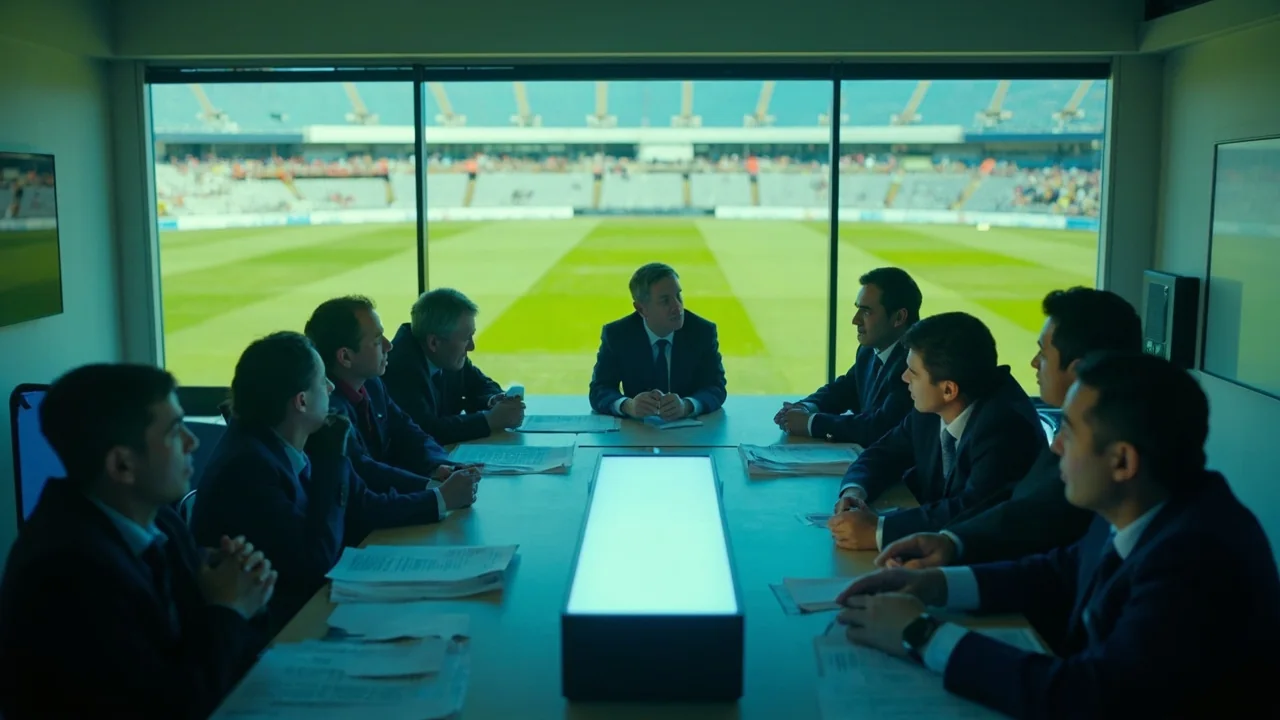
The IPL 2026 mini-auction closed its bidding war at the Zayed Cricket Stadium complex in Abu Dhabi on Tuesday, 16 December 2025, ending the shortest and most rule-heavy rebuild cycle the league has run since the mega-auction era began. It was the third consecutive auction held outside India — Dubai in 2023, Jeddah in 2024, Abu Dhabi in 2025 — and the first mini-auction under the new six-player retention cap, the rewritten Right-to-Match (RTM) procedure and the ₹151 crore purse that every franchise walked into the room with.
What changed on the floor was less about marquee names and more about discipline. Franchises had until 15 November 2025 to lodge their retention decisions, and seven of the ten used that window to release more than one established starter — the deepest release list the league has processed in a single off-season. The bidding day that followed was, in the words of one table-side observer, less a race for players than a race for the right number of slots to fill.
This retrospective reads the event from the rule changes downward. The order matters: the date and venue set the clock; the retention and RTM rules set the shape of every squad; the purse and per-match fee set the budget; the release list set the supply; the bidding itself told us what franchises now value. Read in that order, the auction explains how the IPL 2026 build was meant to play.
The date, the venue and the third overseas edition
December 16, 2025. The Zayed Cricket Stadium complex in Abu Dhabi, the same venue that hosted the second half of IPL 2014 and the 2020 playoff window. The franchise owner tables, the broadcast desk and the bid screens were laid out in the same hybrid format the league has used since the pandemic-era move, with online bidding available for the smaller purses and the marquee set pulled into the room.
The decision to keep the auction overseas for a third straight year was framed by the BCCI as a logistics and broadcast decision rather than a statement about the league's centre of gravity. For the cricket desk, the operational consequence is that the gap between the retention deadline and the auction is short, the trade window straddles the auction, and the squad announcements land just before the Christmas break — a rhythm that the next home international window now has to absorb.
For readers who bookmark only the headline facts of the calendar, the line to remember is short: retention locked by mid-November, auction on the third Tuesday of December, the trade window closing roughly a week before the auction and re-opening immediately after for the post-auction phase. The post-auction window closes about a month before the IPL 2026 season starts, which is the negotiation window for the players who were unsold at the table.
The retention rule: six names, two of them uncapped
Each franchise could take up to six players into the auction cycle through retention or RTM — capped at five capped players (Indian or overseas) and a maximum of two uncapped players. That ceiling is the single most consequential change to the math of the league since the original retention rules were introduced, because it forces every franchise to make a choice between a fifth capped overseas option and a second uncapped domestic option.
The choice plays out in two quiet ways. First, it pushes franchises towards retaining the bulk of their Indian core early, on the assumption that uncapped slots are harder to fill at auction than capped overseas slots. Second, it concentrates the bidding interest on the players who did not get retained — the released list — and it is the released list that this auction was actually about.
For the fantasy reader, the practical effect is that the long tail of squad depth is now thinner than it was in the IPL 2023 mega-auction cycle. With fewer retained slots, the average franchise had to hit the table with a longer ask list, and the bid prices for the second tier of capped players were visibly higher than the season before. The annotation that should sit behind every fantasy XI this year is the same one: at least three of the players in your side were bought at this table.
The rewritten RTM rule: one more raise, then the match
The Right-to-Match card has been the league's most quietly invasive instrument for a decade. In its original form, a franchise could match the highest bid for a released player and take the player back, the only guard-rail being the number of cards held. For IPL 2026, the procedure was rewritten so that the highest bidder receives one final chance to raise the bid before the RTM card can be used.
The change is small in wording and large in outcome. It forces any franchise that wants to use RTM to anticipate that the counter-bid will be increased by the room, and it allows the bidding franchise to read the room's interest in the player before the match is called. In practice, that means RTM is no longer a free safety net — it is a bidding war that ends with the matching team either paying more than the original high bid or losing the player to the higher bidder.
For the franchises, the move lowers the value of the RTM card on borderline players and raises it on the marquee names. For the players, the rule is, in net terms, a small pay rise on contested names. For the fantasy reader, the consequence is that the players who came back through RTM in this cycle were the ones the room cared about most, and the price tag on the alternative is the number to remember when projecting the season's salary-cap depth.
The purse: ₹151 crore and a new per-match fee
Each franchise walked into the auction with a ₹151 crore purse, the highest base purse the league has quoted for a mini-auction. The announcement that accompanied the figure was the more interesting line: incremental performance pay was layered on top of the base, and a per-match fee of ₹7.5 lakh per player per game was added to the compensation structure for the first time.
The per-match fee is the bigger change of the two, because it makes the contract a function of how many games the player plays. A squad member who sits out ten league games earns ₹60 lakh in match fees on top of the base; a regular in the XI earns closer to a crore. The fee is small compared to the marquee contracts, but it changes the calculation for the uncapped and lower-tier capped players, who are now paid for availability, not just for the auctioned price.
The ₹151 crore purse also re-defines what "unspent" means at the end of the auction. With incremental performance pay and the per-match fee riding on top of the base, a franchise that finishes the auction with a healthy unspent balance is not necessarily under-spent — it is preserving a cushion for the in-season buy-back and the impact-player pick. The fantasy reader should read the closing purse figure as the franchise's room for in-season moves, not as a missed opportunity.
The release list: seven franchises, different reasons
The headline of the cycle was the depth of the release list. Delhi Capitals, Chennai Super Kings, Gujarat Titans, Kolkata Knight Riders, Lucknow Super Giants, Punjab Kings and Sunrisers Hyderabad all released more than one established starter, and the published reasons — drawn from the franchise press notes and the post-window media briefings — fell into four families.
Death-bowling rebuilds were the first family. Two franchises that had built around a single specialist death bowler used the cycle to release the specialist and prepare to bid for a different shape of bowler at the table — slower balls, left-arm seam, or a second specialist who could share the 16th–20th overs.
Spin-attack revamps were the second. Three franchises released an off-spinner or a wrist-spinner, not because the player had underperformed, but because the franchise had decided to align its spin pair with the new powerplay rules and the expected pitch map at the home venue. Spin, in this league, is a venue question as much as a player question.
Middle-order restructuring was the third. Two franchises released an established middle-order batter to make room for a younger player who had been a net bowler in the previous cycle, on the calculation that the new batter's ceiling was higher than the established player's remaining floor.
Youth-focused overhauls were the fourth. The remaining release notes cited the desire to give the under-23 cohort more game time in the IPL 2026 cycle, with the franchise deliberately keeping the average age of the squad low. None of the releases was framed as a "mutual decision" in the press notes; all were framed as cricketing calls, which is the house language for a rebuild.
How the bidding day actually read
The table-side observation that survived the cycle was that the bidding was thinner than the room. Marquee names went for the expected prices, and the second tier of capped players drew competitive bids from at least three franchises each, but the long tail — the third and fourth option at each role — drew bids only from one or two. The depth of the bidding pool was, in other words, concentrated at the top and the bottom of the ask list, with a quieter middle.
The consequence is that the squads that left the room with balanced XIs are the ones whose release-list strategy concentrated their ask list in the contested tier. The squads that left the room with thin bowling or thin middle-order options are the ones whose ask list sat in the quieter middle.
For the fantasy reader, the rule is the same one the league has used for a decade: do not read the squad announcement, read the ask list. The squad that was bought, not the squad that was retained, is the one that decides the season's tactical shape.
The trade window: one week before, one month after
The pre-auction trade window opens ahead of the auction and closes approximately one week before it. The post-auction window opens immediately after the auction and closes about one month before IPL 2026 starts. The two windows are not symmetrical: the pre-auction window is the negotiation space for the players who want to move before the retention deadline, and the post-auction window is the negotiation space for the players who were unsold or under-bought.
For the franchises, the post-auction window is, in practical terms, a second mini-auction. The unsold players return to a smaller pool, the franchise purse has been mostly spent, and the trade math is now a question of cash-for-cap, not cash-for-player. The fantasy reader should treat the post-auction window as the period when the squad composition changes materially, and the XI projections made on the auction day should be re-checked at the close of the window.
The broadcast, the timestamp and where to watch the archive
The auction was streamed live on the official IPL YouTube channel for global access, with the broadcast desk handling the room feed and the online bidding feed in parallel. The archive of the bidding day is available on the same channel, with the marquee set and the accelerated rounds timestamped for re-watching. For the reader who follows the league from outside India, the YouTube broadcast is the cleanest archive of the full day, with the same commentators and the same bid screens as the live feed.
For the desk, the practical consequence of the global broadcast is that the same auction is now a single shared reference point across the league's audience — Delhi, Chennai, Mumbai, Dubai, Abu Dhabi and Cape Town all see the same bid screens and the same room. The post-auction analysis is therefore a single conversation, not a fragmented one, and the fantasy reading that emerges from it is the same reading for every fan.
What to read next, and what the auction did not answer
The auction closed the bidding, but it did not close the questions. The two open ones for the desk are the impact of the per-match fee on squad rotation in the early season, and the depth of the trade window's post-auction activity. Both will tell us whether the franchises treated the cycle as a clean rebuild or a holding pattern ahead of the next mega-auction.
For the editor's reading, the most useful follow-on is the squad-by-squad brief we publish on the IPL 2026 desk — captaincy reading, likely XIs, the per-franchise unspent purse and the venue-by-venue fixture rotation that the auction now sets in motion. The auction was the date, the venue and the price; the IPL 2026 page is where the rest of the season gets read.
For ongoing match reports, squad reads, venue briefs and the next dispatch from the auction's after-window, follow the latest cricket news feed for the next update.
Filed by: The Come Fantasy Live cricket desk · IPL 2026 retrospective · Editorial context for Indian readers aged 18 and above. Verified facts are drawn from the publicly reported dossier on the December 16, 2025 IPL 2026 mini-auction in Abu Dhabi — published by Sporting News India and confirmed against the BCCI's pre-auction and post-auction notes. Where a fact is not in the verified record, the copy flags it as such. Numbers and rules are quoted as published; no squad prices, RTM outcomes or unsold-player lists have been invented to fill gaps.